April has a reputation. Each year, brands step into the same space where humour and marketing meet. April Fools’ Day has become a testing ground for ideas. Fake product launches, unexpected announcements, and moments that blur the line between reality and imagination.
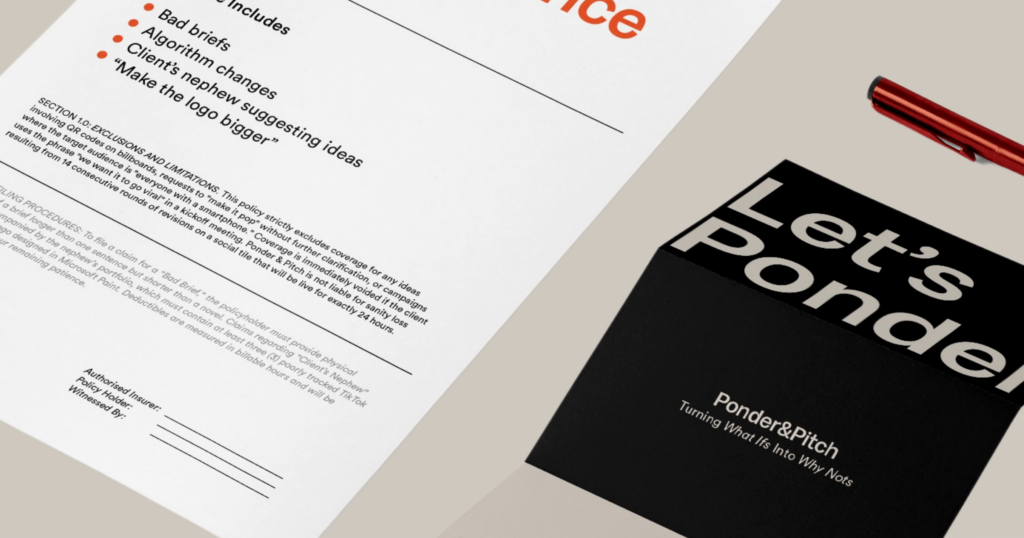
But the value is not in the prank.
It is in what humour reveals about how brands connect.
Comedy in marketing is not about tricks. It is about recognition. When something feels human, people respond to it.
At Ponder & Pitch, we often return to a simple point. Marketing works best when it feels like it comes from people, not systems. Humour is one of the clearest ways to achieve that.

Why Humour Works in Marketing
People remember what they feel.
For years, advertising relied on repetition and persuasion. Today, attention is harder to earn. Brands are not only competing with each other, but with everything else on a screen.
Humour changes the dynamic.
A funny campaign does not feel like advertising. It feels like a moment someone chooses to engage with. That shift matters. It creates familiarity. Over time, familiarity builds trust.
This is why humour in marketing continues to shape some of the most recognisable campaigns. It allows brands to show personality without saying it directly.
And personality is what people connect with.
The Risk of Forced Comedy
Humour only works when it belongs.
Audiences recognise when a brand is trying too hard. A sudden shift in tone, especially from a brand that usually communicates differently, creates distance instead of connection.
April Fools’ Day makes this visible. Some brands use it well. Others create confusion or miss the mark entirely.
The difference is not the idea itself. It is whether the idea fits the brand.
At Ponder & Pitch, tone of voice is never an afterthought. It shapes how every message is received. Humour works when it grows naturally from that tone, not when it is added for attention.

Comedy as a Creative Approach
Humour is not only stylistic. It is strategic.
It can simplify complex messages, make content easier to absorb, and turn everyday communication into something people remember. On platforms like Instagram, TikTok, and LinkedIn, content that feels entertaining often travels further because it aligns with how people already use those spaces.
The goal is not to be funny for the sake of it.
It is to understand how tone shapes perception.
A brand that can occasionally laugh with its audience feels more open. More present. More real.
When Humour Does Not Belong
Not every message needs humour.
Some require clarity, restraint, and sensitivity. Campaigns tied to serious topics, public messaging, or moments of significance need a different tone.
Knowing when to step back is part of the work.
Marketing is not formula driven. It is situational. It depends on context, audience, and timing.Sometimes the right move is to be playful.
Sometimes the right move is to be precise.
What April Fools’ Day Actually Shows
April Fools’ Day works because it breaks expectations. It gives brands permission to experiment and show a different side of their identity.
When done well, those moments stay with people beyond the day itself.
But the real takeaway is not about pranks.
It is about personality.
Brands that feel human build stronger connections. Humour, used carefully, helps reveal that.
Marketing That Feels Human
At Ponder & Pitch, we believe marketing should feel considered, not mechanical. Strategy gives it structure. But tone gives it life.
Humour is one way to express that tone.
When it fits, it works. When it does not, it shows.
April may bring humour to the forefront, but the principle remains constant.
Marketing works best when it feels like a conversation.And sometimes, the most effective conversations include a laugh.